10+ Time Management Myths You Should Stop Believing
Still believe multitasking saves time? Discover 10+ common time management myths that are holding you back and learn what actually works.

If your days are packed with work but your important tasks still don't get done, something isn't working. The bitter truth is that you may be following the wrong productivity advice. Many time management myths sound logical on the surface, which is why they're so easy to believe. However, following the wrong advice can lead to burnout, missed priorities, and constant frustration.
If you want to take control of your day, it's important to separate fact from fiction. Let's look at the most common time management myths that may be holding you back and what you should do instead.
Common Time Management Myths That Are Holding You Back
Here are some of the most common myths on time management and smarter approaches that can help you work more effectively.
Myth #1: Multitasking Boosts Productivity
Many people believe handling multiple tasks at the same time helps them get more done.
In reality, your brain isn't designed to focus on several demanding tasks simultaneously. What feels like multitasking is usually rapid task-switching, which can reduce concentration and increase mistakes.
Every time you switch between emails, meetings, messages, and project work, your brain needs time to refocus. Those small interruptions add up quickly throughout the day.
Do This: Focus on one important task at a time and complete it before moving to the next.
Myth #2: A Packed Schedule Means a Productive One
A calendar filled from morning to evening may look impressive, but being busy doesn't always mean being productive.
When every minute is scheduled, there's no room for unexpected requests, delays, or problem-solving. As a result, you end up rushing through tasks and feeling constantly behind.
Highly productive people often leave space in their schedules for deep work, planning, and flexibility.
Do This: Prioritize important work and leave buffer time between commitments.
Myth #3: There Is One Perfect Time Management Strategy
Many people spend months searching for the perfect time management system.
The truth is that no single method works for everyone. A strategy that helps one person stay organized may feel restrictive or ineffective for another.
The best time management system is the one you can consistently follow.
Do This: Experiment with different approaches and build a system that fits your work style and responsibilities.
Also Read: 10 Best Time Management Apps for Workplace in 2026
Myth #4: A To-Do List Is Enough
Many people believe that creating a to-do list is all they need to stay organized and productive. While to-do lists are useful for capturing tasks, they don't automatically help you complete them.
Long task lists often become overwhelming. Without clear priorities, it's easy to spend time on easy tasks while ignoring the important ones.
Do This: Prioritize tasks based on impact and assign dedicated time to complete them. Use task tracking software to stay organized, monitor progress, and ensure important work gets done on time.
Myth #5: Distractions Are the Problem
Many people believe distractions are the primary cause of low productivity.
While interruptions can certainly affect focus, distractions are unavoidable in today's workplace. Emails arrive, messages pop up, and urgent requests appear unexpectedly.
The real challenge isn't eliminating every distraction. It's creating a system that helps you recover quickly and stay focused on priorities.
Do This: Focus on one important task at a time and deal with emails, messages, and other requests in batches throughout the day.

Did you Know?
Research by McKinsey revealed that 65%of knowledge workers say it's more important to respond quickly to messages than make progress on important priorities. This proves that the real challenge is allowing them to take priority over important work.
Myth #6: Every Task Deserves Perfection
Perfectionism often feels like a sign of hard work, but it can actually slow you down.
Spending too much time perfecting every email, report, or presentation can delay important work and make it harder to meet deadlines.
The reality is that not every task requires the same level of effort or attention. Over time, this mindset can create unnecessary pressure and make it harder to stay motivated.
Do This: Identify which tasks are most important and complete them well. For less important tasks, focus on finishing them efficiently instead of trying to make them perfect.
Myth #7: Save Hard Tasks for Last
As the day progresses, your energy and concentration naturally start to drop. When you leave difficult tasks until later, you may feel tired, distracted, or less motivated to work on them.
As a result, important tasks often take longer to complete or get pushed to the next day.
Do This: Tackle your most demanding task during your peak energy hours.
Myth #8: Multitasking Saves Time
This myth is so common that it deserves special attention. People often believe that answering emails during meetings or switching between projects helps them work faster. In reality, constant context switching creates mental fatigue and slows progress.
What seems efficient in the moment often leads to longer completion times and lower-quality work.
Do This: Schedule specific times to focus on important work without interruptions.
Did you Know?
Research by Deloitte revealed that poor mental health costs UK employers £51 billion a year for employees.
Myth #9: The Early Bird Catches the Worm
You've probably heard that successful people wake up at 5 a.m. While early mornings work well for some individuals, productivity isn't determined by the time you wake up. Everyone has different energy patterns and peak performance hours.
Forcing yourself into someone else's routine may actually reduce your effectiveness.
Do This: Identify when you're naturally most focused and schedule important work during those hours.
Myth #10: You Can Manage Time Itself
Many people think time management means controlling time. The reality is that everyone gets the same 24 hours each day. Time cannot be slowed down, paused, or expanded.
What you can control is how you use your attention, energy, and priorities.
Once you understand this shift, time management becomes much more practical and effective.
Do This: Focus on managing your actions rather than trying to manage time itself.
Pro Tip:
Use a time tracking tool like Time Champ to automatically track how your time is spent throughout the day. This helps you identify productivity gaps, reduce time waste, and make better decisions about how you manage your work.
Myth #11: Breaks Waste Productive Time
As deadlines get closer, many people see breaks as a distraction rather than a necessity. However, working continuously for hours often leads to mental fatigue, reduced concentration, and more mistakes.
Short breaks help your brain recover, improve focus, and maintain energy throughout the day.
Do This: Take short, intentional breaks throughout the day to maintain focus and prevent burnout.
How much time are these myths costing you every week?
Uncover what's stealing your time and start reclaiming productive hours with Time Champ.
Why So Many People Still Believe Time Management Myths
If these time management myths don't work, why do they remain so popular?
The reason is simple: Time management myths often look like productive habits. Workplaces often praise these behaviors and promote them as signs of dedication, even when they don't lead to better results.
Some common examples include:
- A packed calendar that appears organized and efficient.
- Skipping lunch breaks to appear more dedicated.
- Multitasking to look busy and responsive.
- Spending extra time perfecting every task.
- Saying "yes" to everything to appear productive.
The problem is that these habits create the illusion of progress rather than actual progress. Over time, they become routine, making it harder to recognize what's truly helping and what's quietly wasting time.
Proven Time Management Practices That Actually Work
The longer you follow these myths on time management, the more time and energy you risk wasting every day.
The good news is that improving your time management doesn't require a complete overhaul of your routine. A few practical habits can help you stay focused, work more efficiently, and take control of your schedule before small productivity problems become bigger ones.
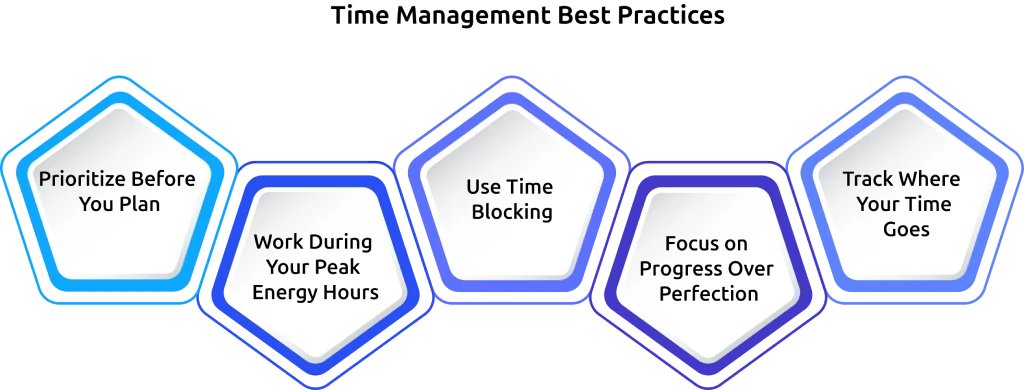
Prioritize Before You Plan
Before creating your schedule, identify the tasks that will have the biggest impact on your goals. Techniques like the Eisenhower Matrix can help you separate important tasks from urgent distractions, making it easier to focus on what truly matters.
Work During Your Peak Energy Hours
Your most challenging work should be done when your energy and focus are at their highest. The Eat That Frog technique encourages tackling your most important task first, helping you make progress before distractions take over your day.
Use Time Blocking
Setting aside dedicated time for important activities creates a structured workday. Here, the Time Blocking technique helps reduce interruptions, improve focus, and ensure important work gets the attention it deserves.
Focus on Progress Over Perfection
Perfectionism can slow you down and make simple tasks take longer than necessary. The 80/20 Rule (Pareto Principle) suggests that a small percentage of your efforts often produce most of your results, helping you focus on what truly matters.
Track Where Your Time Goes
It's difficult to improve your time management if you don't know where your hours are being spent. Time tracking helps you identify distractions, understand work patterns, and make informed decisions about how to use your time more effectively.
Improve Your Time Management with Time Champ
Understanding these time management myths can help you avoid common mistakes. But to manage your time more effectively, you need to know how you're actually spending it. Time Champ makes that easy.
Time Champ is an employee monitoring and time tracking software that helps individuals and teams understand how their time is spent. Instead of relying on assumptions, you get real data that helps you identify productivity gaps and improve your work habits.
Automatic Time Tracking
Automatically records your work activities and hours, helping you understand exactly where your time is spent each day.
Attendance Monitoring
Tracks attendance automatically, giving you a clear view of daily work patterns.
Productivity Tracking
Provides visibility into productive and unproductive activities so you can focus on work that delivers the greatest impact.
App and Website Usage Tracking
Shows how much time is spent across applications and websites, making it easier to identify distractions and improve focus.
Project and Task Tracking
Tracks time spent on specific projects and tasks, helping you prioritize better and stay on top of deadlines.
What if you could take complete control of your time?
Conclusion
Many time management myths may seem helpful, but they often lead to wasted time, unnecessary stress, and lower productivity. The key is to focus on habits that help you prioritize effectively, stay focused, and use your time with purpose.
Using time tracking tools like Time Champ can help you understand where your time goes, identify productivity gaps, and build stronger work habits for long-term success.

Guna Lakshmi

Table of Content
 Common Time Management Myths That Are Holding You Back
- Pro Tip:
- Why So Many People Still Believe Time Management Myths
- Proven Time Management Practices That Actually Work
- Improve Your Time Management with Time Champ
- Conclusion

Related Blogs

Learn how time tracking improves remote team productivity through better visibility, accountability, performance tracking, and smarter team management.
Anjali | May 16, 2026
Want to boost productivity? Uncover 20 time tracking best practices that can transform your workflow and help you achieve more with less effort.
Guna Lakshmi | July 01, 2025
Discover effective ways to build employee trust in automatic time tracking software and create a transparent, productive, and positive work environment.
Thasleem Shaik | Mar 13, 2025
Find out why you may need to monitor freelancer work, including key pros and cons that affect productivity, quality, accountability, and trust in teams.
Jahnavi Pulluri | Apr 29, 2026
Learn how automated time tracking improves team productivity, reduces manual work, builds trust, and delivers smarter workforce insights for managers today.
Anjali | May 15, 2026
Discover practical time management techniques to improve focus, prioritize tasks, reduce distractions, and manage your workday more effectively.
Thasleem Shaik | May 21, 2026


 4.7/5 avg.
Ready to Manage Your Workforce Smarter?
Join our family of 1500+ companies using smart insights to redefine workforces!

Free Trial
No Credit Card Required